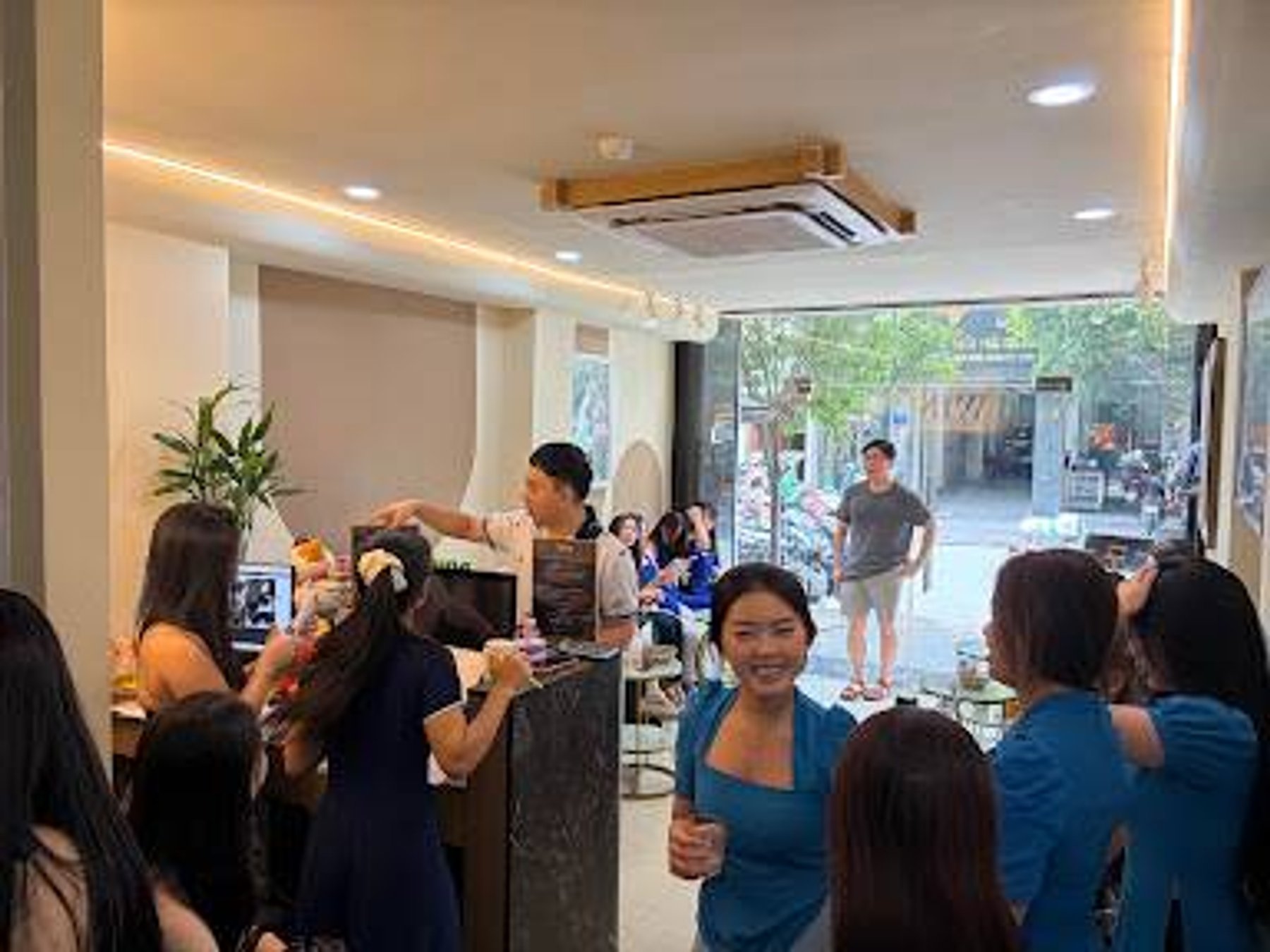
2027 Vietnamese-Style Hair-Washing Experience in Ho Chi Minh City: Worried About Pain, Water, or Awkwardness? How to Communicate Before Your Service
Trying a Vietnamese hair wash for the first time? How do you communicate your preferences for massage pressure, water temperature, ear cleaning, and products? Here are common phrases in Chinese, English, and Korean to help make the service more comfortable.
For many travelers trying a Vietnamese hair wash for the first time, the biggest worry isn’t necessarily the process itself, but whether they should speak up: Should you say something if the water is too hot? Can you ask for lighter pressure if the massage is too strong? Will it be awkward if you don’t want a particular treatment? In fact, this kind of service is meant to be adjusted to suit how each customer feels. Preparing a few simple phrases before you go can help you feel much more at ease once you lie down on the hair-washing bed.
Before taking your seat, mention three things: sensitive areas, product preferences, and your plans for today
Before the service begins, you can let the staff know whether your scalp tends to itch, whether you have recently dyed your hair or had any chemical treatments, and whether you are sensitive to fragrances, essential oils, or certain skincare products. This is not about treating a regular hair wash as a medical consultation, but about helping the staff understand which parts of the service need a gentler approach and which products they should check with you about before using. If your scalp is currently red or swollen, stinging, wounded, or noticeably flaking, postponing the massage and seeking professional advice is safer than pushing through the treatment.
If you need to catch a flight, meet a client, wear a helmet, or take photos later that day, mention this at the start as well. Some Vietnamese hair-washing packages include shampooing, scalp relaxation, shoulder and neck massage, or other treatments, but not every shop finishes the service in the same way. Ask in advance whether your hair will be blow-dried at the end and how much time you should allow for styling, and let the staff know your schedule so you are less likely to end up rushing to fix your hair after the service.
If the pressure doesn’t feel right, just say 「輕一點」
A scalp massage is not necessarily more effective with more pressure. Some people like a firm, noticeable pressure, while others just want a gentle, relaxing touch. Even the same person may prefer different levels of pressure on the top of the head, behind the ears, at the back of the neck, and on the shoulders. At the start, you can use gestures to indicate 「輕一點」 or 「再大力一點」; you do not need to wait until it hurts to speak up. If a particular spot is especially sensitive, pointing it out and saying 「這裡輕一點」 makes it easier for the other person to adjust immediately than simply saying 「不舒服」.
Keeping communication open during a massage is an important part of staying comfortable. If the pressure starts to cause sharp pain, your hair is being pulled, your neck is at an uncomfortable angle, or you simply want a break, you can ask to pause. Staff should respect your boundaries; choosing a package does not mean you have to accept every part of it. For travelers, the most practical approach is to ask before starting: 「如果不舒服,我可以隨時要求調整或停止嗎?」 This question is simple and direct, and can help prevent misunderstandings about what the service includes.
Water temperature, lather, and ear cleaning: three details to give feedback on right away
A Vietnamese hair wash usually involves more than just rinsing your hair; it also includes ear cleaning. During this step, warm water enters the ears as part of the cleaning process. Afterward, the massage therapist will use cotton swabs to dry the moisture inside and around the ears. So feeling warm water in your ears does not necessarily mean something has gone wrong, but if the water temperature, rinsing pressure, or cleaning method makes you uncomfortable, you can still speak up immediately. If foam gets into your eyes, the water is too hot, or you feel a stinging sensation around your ears, do not suffer in silence.
The American Academy of Dermatology recommends gently massaging the scalp when shampooing rather than vigorously rubbing the hair back and forth; after washing, avoid pulling or tugging roughly on wet hair. These are general hair care guidelines and do not mean that everyone's scalp will react the same way. If you experience significant burning, a rash, or persistent itching after using a product, stop using that product and monitor the symptoms. Persistent or recurring scalp problems should be assessed by a doctor or dermatology professional rather than masked with massage services.
What’s a natural way to decline a service I don’t want?
The simplest approach is to frame your refusal as a personal preference rather than a criticism of the service. For example: “Today I just want a hair wash and some time to relax, so I’ll skip the facial for now.” If you don’t want essential oils, are uncomfortable with hot stones, or would rather not have a particular add-on, you can also ask when choosing a package what is included and what can be skipped. If the staff know your preferences before they start, they won’t have to keep guessing during the service.
Although the massage therapists are all Vietnamese, they can usually understand basic words and phrases commonly used by travelers in Chinese, English, Korean, and other languages at Vietnamese hair-washing shops, such as “lighter,” “firmer,” and “it hurts.” You can simply say 「輕一點」 in Chinese, “lighter” or “it hurts” in English, or 「살살 해 주세요」 (please be gentler) or 「아파요」 (it hurts) in Korean.If you want to keep things as simple as possible, you can also use gestures to point to the top of your head, your ears, or your shoulders. The goal is not to speak elegantly, but to let the massage therapist know that you want to adjust the pressure, water temperature, or position, or that you would like to pause for a moment. For services involving the head, neck, and ears in particular, you should communicate any concerns right away. You do not need to force yourself to endure discomfort because of a language barrier.
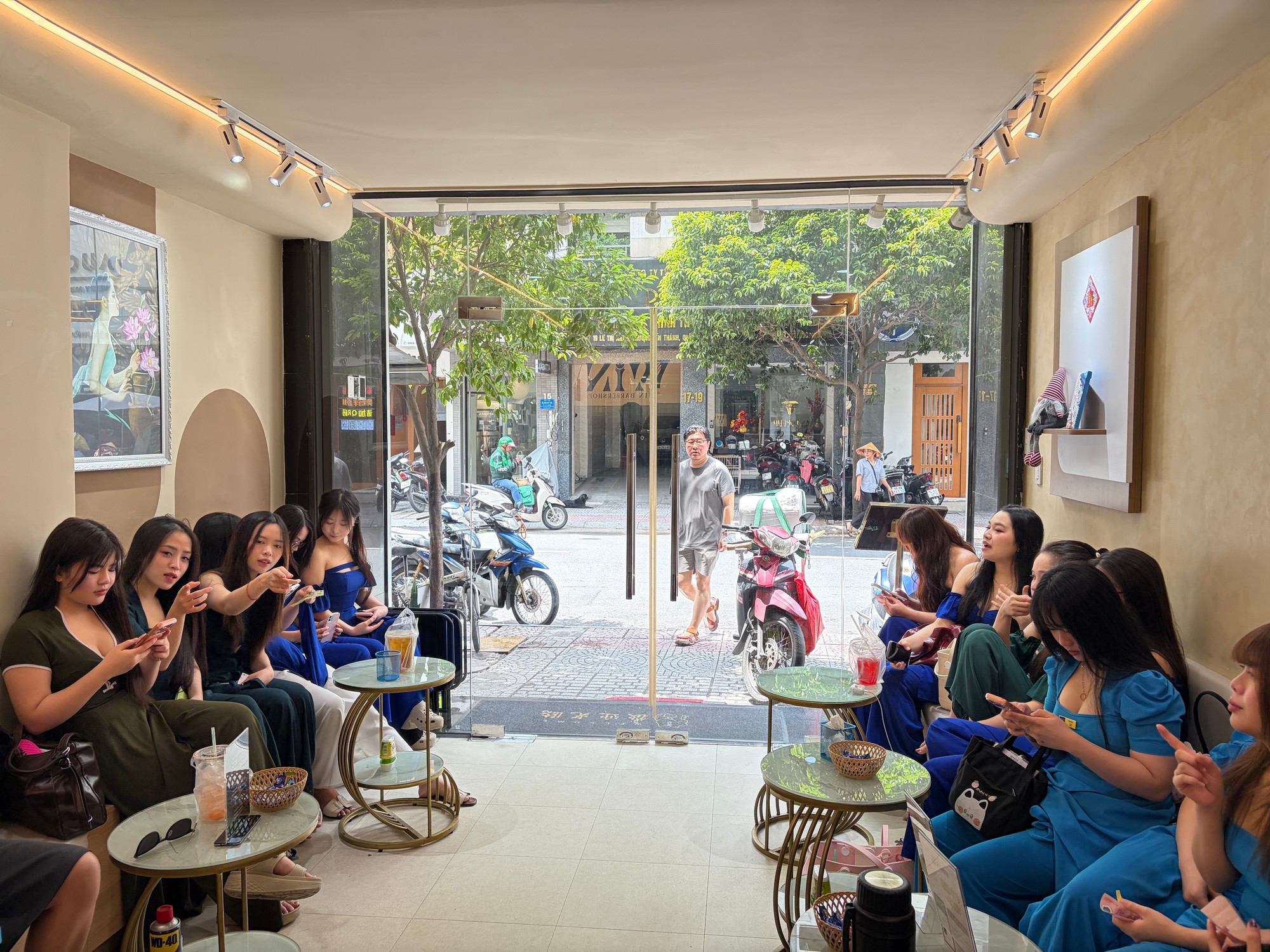
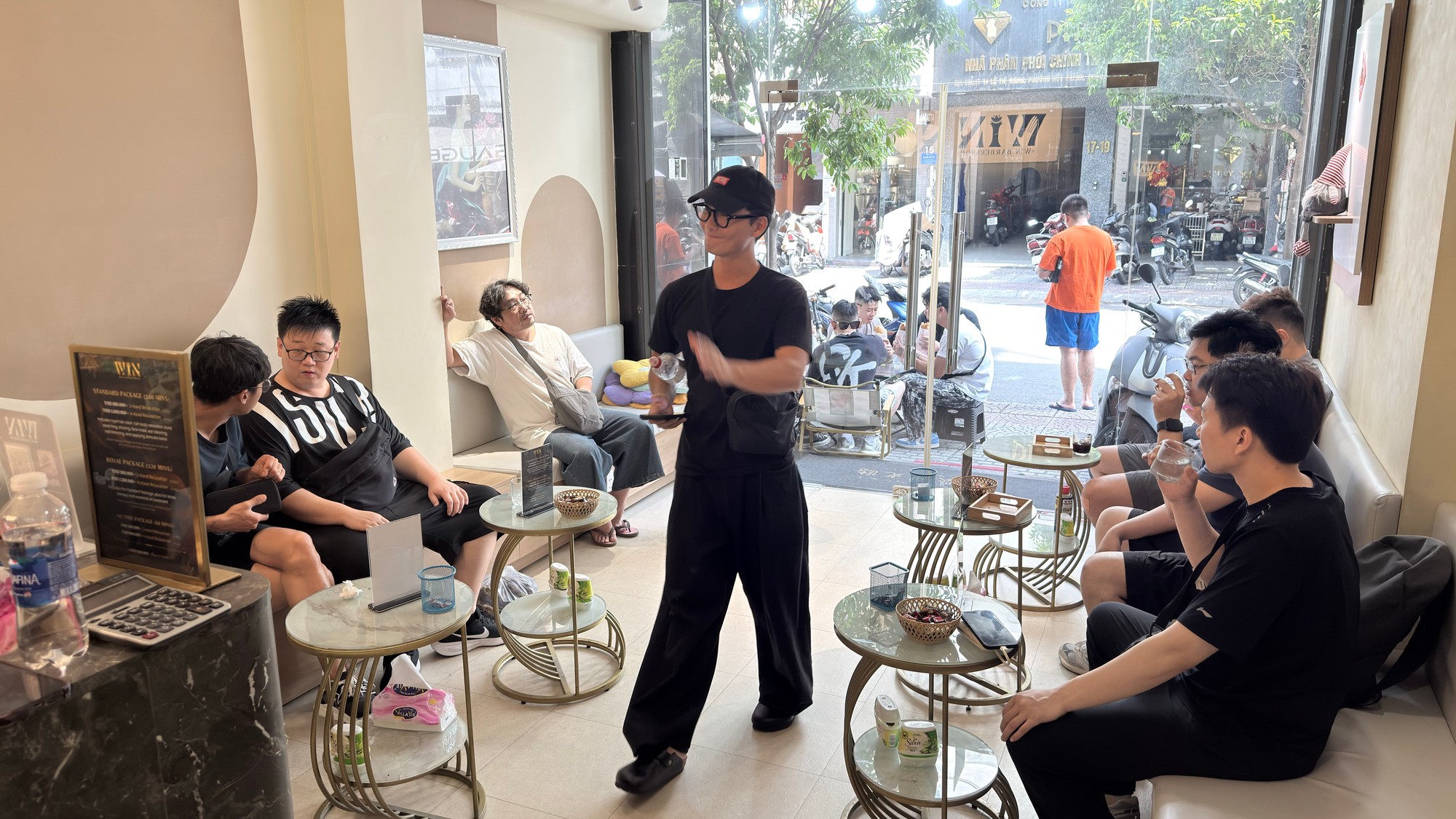
Before booking at Win Barbershop, you can check what’s included in the package.
Win Barbershop’s official services page lists three packages: 60-minute Short-on-time, 100-minute Standard, and 120-minute Royal, each with different services and durations. Royal also lists hot stone and essential oil treatments. When booking, you can ask three questions upfront: which steps are included in the package you choose for that day, whether your hair will be blow-dried after washing, and whether any treatment you have concerns about can be adjusted in advance. This helps you fit the visit into your schedule and make your comfort boundaries clear beforehand.
Win Barbershop is located at 46 Lê Thị Riêng, Phường Phạm Ngũ Lão, Quận 1, 胡志明市 and is open daily from 9 a.m. to 10 p.m. If this is your first Vietnamese hair wash, you don’t need to know every step beforehand. Simply explain any sensitive areas before the service begins, pay attention to the water temperature and pressure throughout, and speak up immediately if you feel uncomfortable. This will usually help tailor the relaxing service to your needs.